
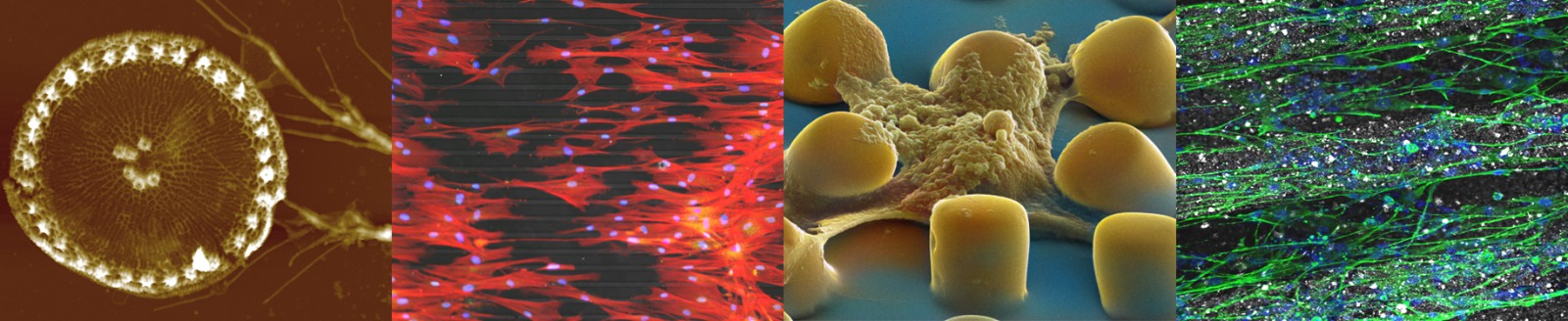
The research activities of the Advanced Biomaterials Laboratory focus on the design, development, and biological evaluation of advanced materials and microengineered platforms for biomedical and biotechnological applications. Our work is inherently multidisciplinary, integrating materials science, bioengineering, cell biology, and applied physics, and is supported by a strong network of national and international collaborations.
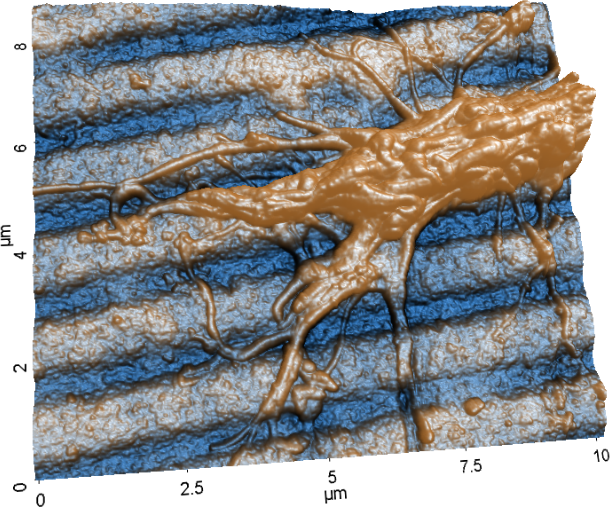
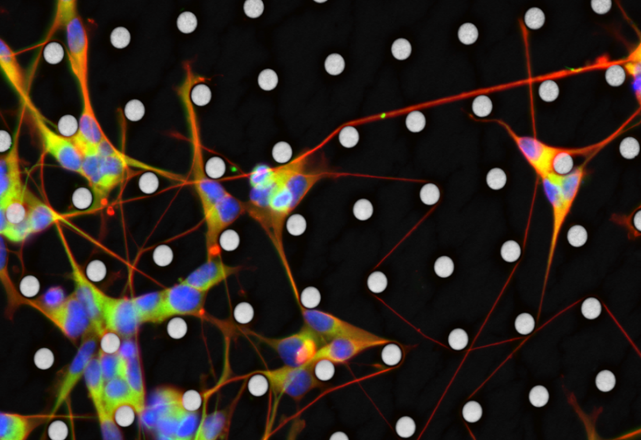
A major research focus is the development of conductive micro- and nanostructured biomaterials for regenerative medicine, particularly targeting excitable tissues such as neural and muscle tissues. By combining micro- and nanotopographical cues with electrical conductivity, we engineer biomimetic interfaces that enhance cell adhesion, alignment, maturation, and long-term functional integration.
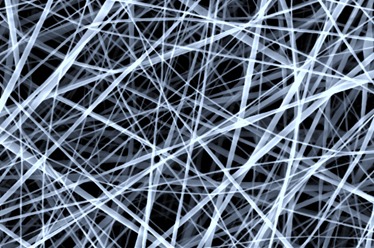
In parallel, the laboratory designs electrospun biodegradable nanofibrous scaffolds for controlled drug and nanoparticle delivery for regenerative medicine and transdermal delivery applications, exploiting their extracellular-matrix-like architecture and tunable functional properties.
In addition, the Advanced Biomaterials Laboratory develops advanced organic bioelectronic and neuroelectronic interfaces based on flexible, PEDOT-based devices for recording from and stimulating living tissues. These platforms are used both to investigate fundamental aspects of electrochemical performance, charge transport, and electrically driven stem cell differentiation, and to guide the optimization of next-generation bioelectronic interfaces. Finally, the laboratory investigates cancer cell migration in engineered 2.5D microenvironments under controlled mechanical stress and chemical gradients, with the aim of elucidating how physical cues regulate cell migration, mechanotransduction, and cellular adaptation processes relevant to cancer progression.