
Organic Bioelectronics and Neuroelectronics
Developing organic bioelectronic interfaces that can record, stimulate, and interact with living tissues.
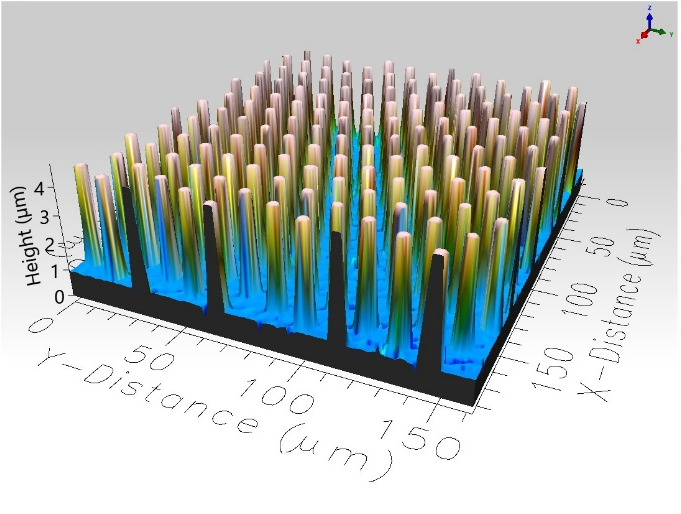
Our research centers on PEDOT-based flexible devices, such as ultra-flexible µ-ECoG arrays, 3D micropillar electrodes, and composite coatings, which provide high electrochemical performance and excellent biocompatibility.
We explore fundamental aspects such as charge transport scaling, electrochemical capacitance, and the neurogenic differentiation of neural crest-derived stem cells in response to electrical and topographical cues. These studies inform the design of next-generation neural interfaces for both recording and stimulation in vivo.
Related Publications
- Ultra‐Flexible µ‐ECoG Arrays Based on PEDOT: PSS Micropillars[Link to paper]
- Poly (3, 4-ethylenedioxythiophene)-Based Neural Interfaces for Recording and Stimulation: Fundamental Aspects and In Vivo Applications[Link to paper]
- Flexible neural interfaces based on 3D PEDOT: PSS micropillar arrays[Link to paper]
- Scaling of capacitance of PEDOT: PSS: volume vs. area[Link to paper]
- PEDOT: PSS promotes neurogenic commitment of neural crest-derived stem cells[Link to paper]
- Electrodeposited PEDOT: Nafion composite for neural recording and stimulation[Link to paper]